
info@onemoss.com
+8615858821847
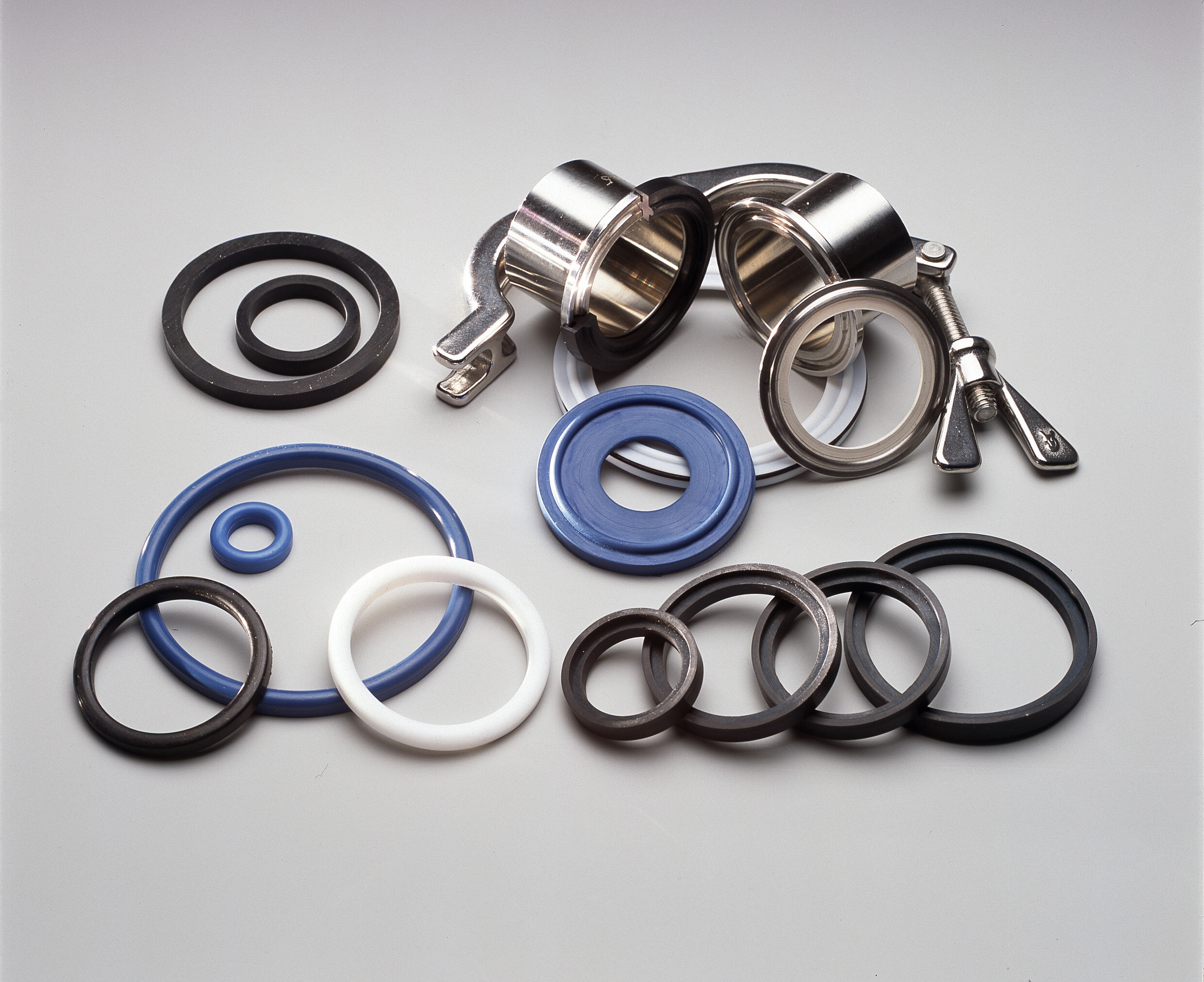
What gasket materials are suitable for sanitary processing? ONEMO offers sanitary gaskets in multiple materials to suit different process media and temperature requirements. The right gasket selection is critical for maintaining hygienic seals in tri-clamp and flange connections.
EPDM gaskets are suitable for general food, dairy and beverage applications with good chemical resistance and temperature range. Silicone gaskets offer excellent temperature resistance for high-temperature CIP and SIP cycles. PTFE gaskets provide chemical resistance for aggressive media. FKM/Viton gaskets are available for specialized applications.
ONEMO gaskets are designed for use with standard tri-clamp fittings and are compatible with all ONEMO sanitary clamp fittings. Proper gasket selection ensures leak-free connections in pharmaceutical, food, dairy and beverage processing lines. All gaskets meet FDA 21 CFR requirements for food contact.
A sanitary gasket is a sealing component placed between two tri-clamp or flange connection surfaces to prevent leakage while maintaining hygienic conditions. Unlike industrial gaskets, sanitary gaskets are designed with crevice-free surfaces, comply with FDA 21 CFR 177.2600 for food contact, and can withstand CIP/SIP cleaning cycles. The gasket material directly affects seal integrity, contamination risk, and service life.
Common sanitary gasket materials include: EPDM (general purpose, good chemical resistance, FDA compliant), Silicone (high temperature, flexible, suitable for SIP at 135°C), PTFE/Teflon (excellent chemical resistance, low friction), and Viton/FKM (high temperature, oil and acid resistant). EPDM is the most common choice for food and dairy applications (70-80% of industry use). For pharmaceutical applications with SIP cycles, silicone or PTFE-encapsulated gaskets are preferred.
ONEMO recommends replacing gaskets every 6-12 months for standard food/dairy applications, or every 3-6 months for pharmaceutical/biotech with frequent SIP cycles. Signs that a gasket needs replacement include: visible compression set (flattening), hardening or cracking, leakage at connection points, and difficulty achieving proper clamp closure. Regular inspection during maintenance shutdowns is essential.
Most EPDM and silicone gaskets can withstand both CIP (cleaning at 60-85°C with caustic/acid solutions) and SIP (sterilization at 121-134°C saturated steam). However, repeated SIP cycles accelerate gasket aging. For applications with frequent SIP (>50 cycles/month), we recommend silicone or PTFE-encapsulated gaskets which offer better steam resistance. Replace gaskets more frequently in SIP applications and inspect after each sterilization cycle.
Standard elastomeric gaskets (EPDM, silicone) compress under clamp load to form a seal. Compression-limiting gaskets (also called "gasket with ring" or "centering ring") include a rigid inner ring that prevents over-compression and extends service life. These are recommended for larger diameter connections (4"/DN100 and above), vacuum service, and applications requiring consistent bolt torque. At ONEMO, we stock both types and can advise on the best option for your specific process conditions.
The most common causes of tri-clamp gasket leakage are: (1) Gasket misalignment - the gasket is not centered on the ferrule face, (2) Worn or compressed gasket - the gasket has reached end of life, (3) Damaged ferrule surface - scratches or dents on the ferrule sealing surface, (4) Over-tightening - excessive clamp force deforms the gasket, (5) Wrong gasket size - using a gasket that does not match the ferrule specification. To fix: first check gasket alignment and re-center if needed, inspect the ferrule surface for damage, verify gasket size matches ferrule specification (ISO 2852, DIN 32676, or 3A standards), and replace the gasket if worn.
Sanitary gaskets must comply with FDA 21 CFR 177.2600 for rubber articles intended for repeated food contact, and 3-A Sanitary Standards for material composition and surface finish. Additional standards include: USP Class VI for pharmaceutical/biotech applications, EC 1935/2004 for EU food contact materials, and ASME BPE for bio-processing equipment. Always verify material certifications when sourcing gaskets for regulated applications. ONEMO provides full material compliance documentation with every order.
Yes. PTFE (Teflon) gaskets can operate at continuous temperatures up to 260°C (500°F), making them suitable for high-temperature process lines and steam service. However, PTFE has lower elasticity than elastomeric gaskets, which means it requires careful clamping to achieve a proper seal and may need re-torquing after thermal cycling. For applications above 200°C, PTFE-encapsulated silicone gaskets offer a good balance of temperature resistance and sealing performance.
Standard sanitary ferrule sealing surfaces should have a surface finish of Ra ≤ 0.8 μm (32 μin) for food and dairy applications, and Ra ≤ 0.5 μm (20 μin) for pharmaceutical and biotech applications. A smoother surface finish provides better gasket sealing and reduces bacterial adhesion. ONEMO supplies ferrules with Ra ≤ 0.6 μm as standard, meeting both food and pharmaceutical requirements.
Tri-clamp gasket sizes match the pipe outer diameter (OD). Common sizes include: 1/2" (OD 9.5mm), 3/4" (OD 17.2mm), 1" (OD 25.4mm), 1.5" (OD 38.1mm), 2" (OD 50.8mm), 2.5" (OD 63.5mm), 3" (OD 76.2mm), 4" (OD 101.6mm), and 6" (OD 152.4mm). Always measure the ferrule OD, not the pipe schedule. If using DIN or SMS standard ferrules, ensure you select the corresponding DIN or SMS gasket size as these differ slightly from ISO/3A dimensions.
Contact: Pershing
Phone: +8615858821847
E-mail: info@onemoss.com
Whatsapp:+8615858821847
Add: 71 Liuzhai Section, Luodongnan, Yongzhong Street, Longwan District, Wenzhou City
We chat